
Best portable chargers for camping usually come down to one thing: reliable power when you’re cold, tired, and far from an outlet. The hard part is that what works for a weekend hike can be the wrong pick for a multi-day basecamp, and specs on a product page rarely tell the whole story.
This guide narrows your choices using the details that matter outside, not just on paper: usable capacity, charging speed, cold-weather behavior, how many ports you actually need, and how to keep your setup light.
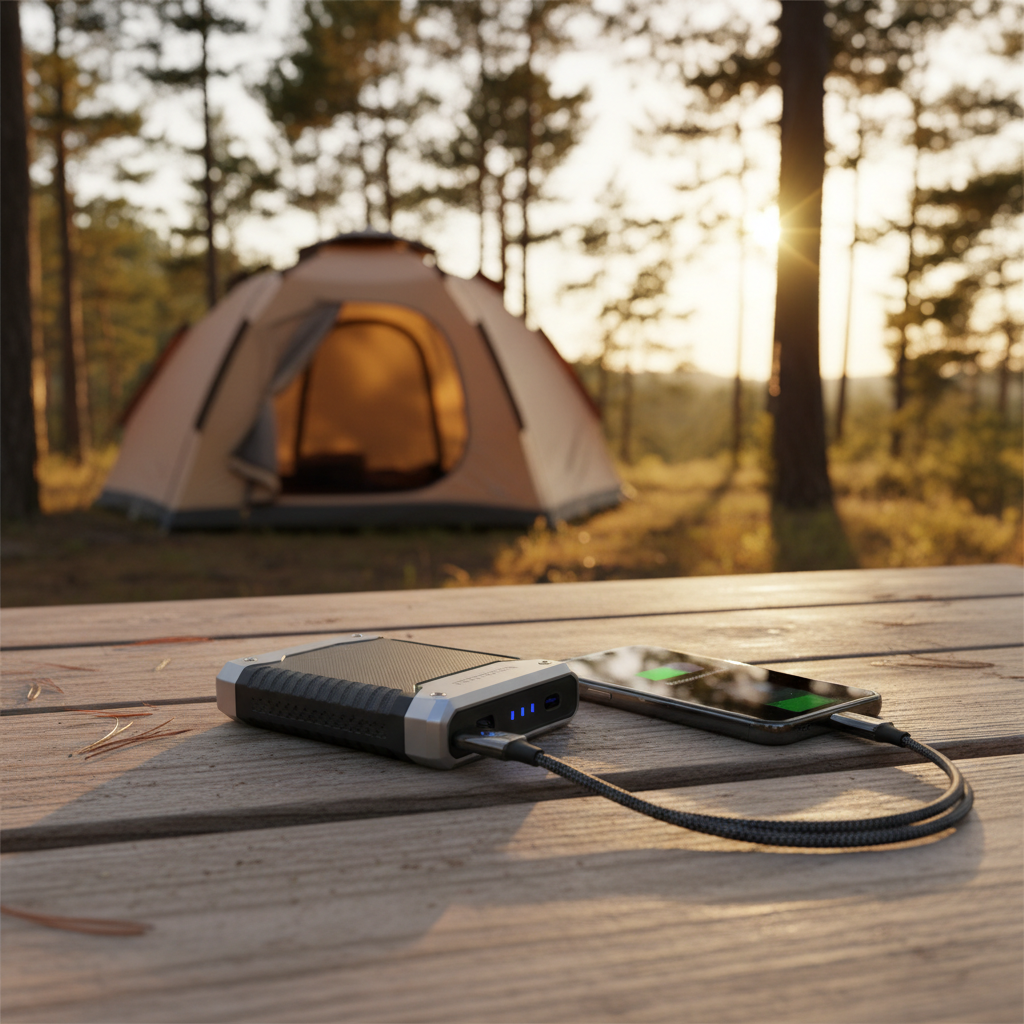
One common misunderstanding: bigger “mAh” does not automatically mean better for the trail. Weight, port types, and whether the charger can fast-charge your devices can matter more than raw numbers.
What “best” means outdoors (not in a living room)
Camping and hiking punish batteries. Cold nights, dusty pockets, and quick top-ups between trail breaks change what “good” looks like.
- Usable capacity beats advertised capacity: power banks lose energy during voltage conversion, and cold can reduce performance. You rarely get 100% of the rated number.
- Fast charging saves downtime: USB-C Power Delivery (PD) typically matters more than extra USB-A ports.
- Portability is a feature: a heavy brick may be “powerful” but still wrong for a day hike.
- Ruggedness helps, but don’t overpay: water resistance is nice, yet most people mainly need decent build quality plus a simple zip bag.
According to National Park Service (NPS) guidance on trip planning and safety, being prepared with essentials is part of responsible recreation, and for many hikers that includes keeping navigation and communication devices powered when needed.
Quick comparison table: pick a category first
If you decide the category before the brand, shopping gets easier. Here’s a practical way to sort the best portable chargers for camping by trip style.
| Trip type | Typical capacity range | What to prioritize | Common trade-off |
|---|---|---|---|
| Day hike / emergency backup | 5,000–10,000 mAh | Low weight, USB-C PD, slim shape | Fewer full phone recharges |
| Weekend camping (1–2 nights) | 10,000–20,000 mAh | 2+ ports, fast input for recharging | Heavier in pocket |
| Multi-day / group charging | 20,000–30,000 mAh | High output USB-C PD, pass-through (if needed) | Weight and bulk |
| Basecamp / car camping | 30,000 mAh+ or power station | AC outlets, multiple devices, durability | Not backpack-friendly |
How to size your power bank (simple math that actually holds up)
To avoid overbuying, start with what you need to charge. Many people just want phone + headlamp + maybe a GPS watch.
A quick rule: take your device battery size, multiply by how many full charges you want, then add a buffer for conversion loss and cold.
- Phone: many modern phones land roughly in the 3,000–5,000 mAh range.
- Headlamp: rechargeable models vary, often much smaller than a phone.
- GPS watch / earbuds: usually small, but they add up.
Then apply a realism factor: in the field, you might only see 60–80% of a power bank’s rating as usable output in many situations. Cold weather can push it lower, so leave yourself margin if your trip includes freezing nights.
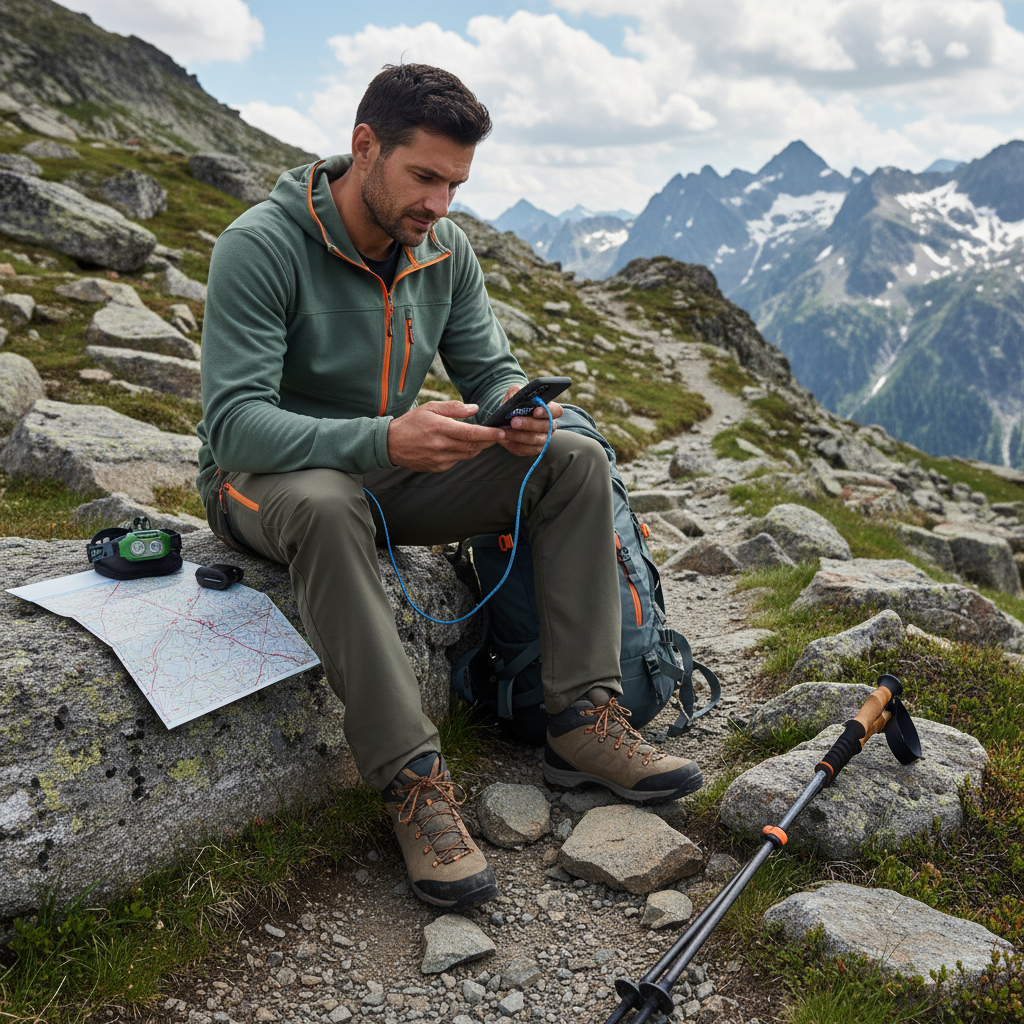
If you’re trying to choose the best portable chargers for camping and you’re stuck between 10,000 and 20,000 mAh, the honest answer is often: pick 10,000 for solo day trips, 20,000 for weekends or shared charging.
Features that matter most (and which ones are mostly marketing)
Must-haves for most campers
- USB-C PD output: helps charge phones faster and can power some tablets.
- USB-C input (fast recharge): your power bank should refill quickly from a wall charger or car adapter.
- Clear battery indicator: 4 LEDs are okay, a percentage display is better for planning.
- Enough ports for your reality: one USB-C plus one USB-A covers many kits.
Nice-to-haves, depending on your trips
- Rugged shell / water resistance: helpful in wet climates, boating trips, or if your gear gets tossed around.
- Low-power “trickle” mode: useful for small devices like earbuds or some headlamps that disconnect during fast-charge negotiation.
- Pass-through charging: can be convenient in cabins, but not always efficient and not always recommended by every manufacturer.
Features to be skeptical about
- Built-in solar panels on a small power bank: they often recharge slowly in real conditions, especially in shade or cloudy weather. A dedicated folding panel tends to be more practical if you truly need solar.
- Wireless charging in the backcountry: it can waste power and requires careful alignment, fine for car camping, less compelling on foot.
Practical recommendations by camping style
Instead of pretending there’s one “winner,” here are grounded picks by scenario, which is usually how people search for the best portable chargers for camping anyway.
1) Ultralight day hikes
- Target: 5,000–10,000 mAh, USB-C PD if possible
- Bring: short USB-C cable, keep it in an inner pocket in cold weather
- Expect: 1–2 phone top-ups depending on phone size and conditions
2) Weekend tent camping for 1–2 people
- Target: 10,000–20,000 mAh
- Look for: USB-C PD output + fast USB-C input, at least two ports
- Extra tip: if you share, agree on a charging window so one person doesn’t drain it at 2 a.m.
3) Multi-day hikes and thru-hike segments
- Target: 20,000–30,000 mAh if you can’t recharge often
- Look for: efficient PD charging, proven brand support, durable ports
- Reality check: weight matters, but so does not running out of nav power on day four
4) Car camping or basecamp with many devices
- Consider: large-capacity banks or a small power station, especially if you want to charge cameras, drones, or laptops
- Look for: multiple outputs, easy readout, stable placement on a table
Field checklist: confirm you picked the right charger before you buy
This is the “save yourself a return” list. Skim it, and you’ll know quickly if a model fits your kit.
- Your phone supports fast charging? If yes, buy a bank with USB-C PD, otherwise you pay for speed you can’t use.
- Your cable supports the wattage? Some older or bargain cables limit charge speed.
- You need USB-A at all? If all your gear is USB-C now, prioritize two USB-C ports.
- Cold trip coming up? Plan extra capacity and store the bank warm at night.
- Flying to the trip? Check airline rules for lithium battery size before you pack.
- Charging small devices? Make sure it has low-power mode or reliable support for tiny loads.
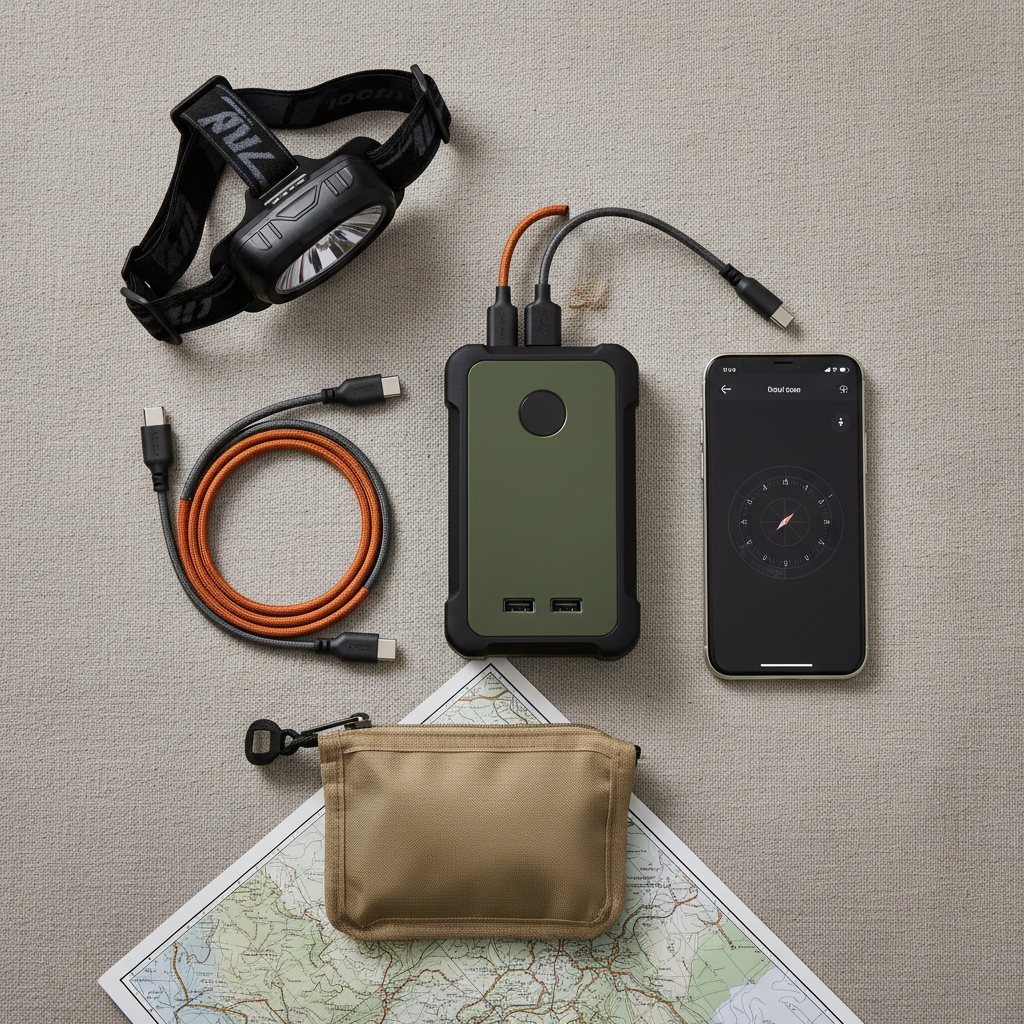
If you can answer these without squinting at the spec sheet, you’re already shopping smarter than most people looking for the best portable chargers for camping.
How to use a power bank on the trail (so it lasts longer)
Most “battery disappointment” comes from habits, not defects. A few small moves stretch your capacity noticeably.
- Top up earlier, not at 1%: many phones charge more efficiently in the middle range than near empty.
- Use airplane mode when you can: searching for signal can drain a phone faster than screen time in remote areas.
- Keep devices warm: in cold weather, store your phone and power bank close to your body.
- Charge one device at a time when possible: splitting output across ports can slow things down and create more losses.
- Turn off “vampire” features: Bluetooth, hotspot, and background location can quietly chew battery.
Common mistakes and safety notes (worth reading once)
A portable charger is simple gear, but it still deserves basic respect.
- Cheap, no-name batteries: quality control varies. If a deal feels too good, it often is.
- Leaving it in direct sun: heat can stress lithium batteries, and in some situations might create safety risks.
- Water exposure: even “rugged” models can fail if ports get wet. Dry everything before charging.
- Damaged cables: frayed cords can cause intermittent charging, heat, or device warnings.
According to Federal Aviation Administration (FAA) guidance on lithium batteries, spare lithium batteries and power banks are generally required to be carried in carry-on baggage rather than checked luggage. If you’re flying to a trailhead, confirm your specific airline’s policy and the watt-hour limits, since rules can vary by device size and carrier.
Conclusion: the right pick is the one you’ll actually carry
The best portable chargers for camping are rarely the biggest, they’re the ones that match your trip length, charging style, and tolerance for weight. If you start by choosing a category, then insist on USB-C PD and a realistic capacity, you’ll avoid most bad buys.
If you want a quick next step, take your next trip length, pick a capacity band from the table, then double-check ports and cables against your actual devices. That 3-minute audit usually beats hours of review scrolling.
Key takeaways
- 10,000 mAh fits most day hikes, 20,000 mAh fits many weekends, larger sizes are for longer gaps between recharging.
- USB-C PD and fast USB-C input matter more than extra gimmicks.
- Plan for usable capacity, not the number printed on the box, especially in cold conditions.
FAQ
-
What capacity is best for portable chargers for camping if I only need my phone?
For many people, 10,000 mAh is a comfortable middle ground for a weekend buffer, while day hikes can work with 5,000–10,000 mAh if you manage phone settings. -
Do I need USB-C Power Delivery for hiking?
If your phone supports fast charging, PD is usually worth it because it shortens charging sessions during breaks, but it’s not mandatory for basic emergency power. -
Are solar power banks good for camping?
Small built-in panels often recharge slowly outside ideal sun, so they can be a backup at best. For reliable solar, many campers prefer a separate folding panel paired with a power bank. -
How many times will a 20,000 mAh power bank charge an iPhone?
It depends on the iPhone model and losses from conversion and temperature. In many real-world cases, people see a few full charges rather than the “math-perfect” number. -
Why does my power bank charge my headlamp and then stop?
Some small devices draw very low current and the bank may auto-shutoff. Look for a low-power mode, or choose a model known to support low-load charging. -
Is it safe to charge devices inside a tent?
In general it can be fine, but heat buildup and damaged cables are the risk points. Keep the bank on a flat surface, avoid covering it with clothing or sleeping bags, and stop if you notice unusual heat or smell. -
What’s more important, mAh or watts?
mAh relates to capacity, watts relate to charging speed. For comfort on the trail, you typically want enough capacity for your trip and enough wattage to refill devices quickly when you have time.
If you’re trying to simplify gear decisions, a good approach is building a small “power kit” around one bank that fits your typical trip, plus the right cable and a compact wall charger for town stops. If you want, tell me your device list and trip length, and I can narrow it to a few charger categories that fit without overpacking.