
Best portable bluetooth speakers outdoor shopping usually goes sideways for one simple reason, most speaker lists ignore what actually happens outside, wind, distance, dust, wet hands, and a phone that’s never sitting one foot away.
This guide focuses on real outdoor use, how loud you need it, what IP ratings matter, which features are worth paying for, and where “bigger battery” still disappoints in practice. You’ll also get a quick comparison table and a simple decision checklist so you can stop overthinking it.
One more thing before we get into picks, there is no universal “best” here. The right move depends on whether you want background music at a campsite, clean podcasts by the pool, or a speaker that can hang at a windy beach without sounding thin.
What “outdoor” really demands from a Bluetooth speaker
Indoors, almost any decent speaker sounds fine because walls help bass and you sit closer. Outside you lose that support, so specs and design matter more than people expect.
- Usable loudness: Not peak watt claims, but whether it stays clean at higher volume without harsh treble.
- Battery you can trust: Real runtime changes with volume and bass boost, a “24-hour” label can look very different at 70% volume.
- Water and dust protection: The right IP rating saves you from sand, rain, and accidental drops near water.
- Carry and placement: A great-sounding brick that you hate carrying becomes a “car speaker,” not an outdoor speaker.
- Connection stability: Outdoors you move around, and bodies block signal more than people think.
According to the Federal Communications Commission (FCC), Bluetooth operates in the 2.4 GHz band, which can face interference from common devices and obstacles, so real-world stability often matters more than “latest Bluetooth version” marketing.
Quick comparison table: match the speaker type to your use
If you want a fast shortcut, decide your “speaker class” first. Many buyers get better results picking the right size category than chasing micro-features.
| Outdoor scenario | Best speaker type | What to prioritize | Common regret |
|---|---|---|---|
| Solo hikes, podcasts, light music | Compact clip-on / mini cylinder | Portability, IP67, simple controls | Not loud enough in wind |
| 2–6 people at campsite or BBQ | Mid-size “bottle” speaker | Balanced sound, 12–20h battery, strap | Bass drops off outdoors |
| Beach days, bigger groups | Large portable (handle) speaker | Volume headroom, rugged build, EQ app | Heavy, takes space |
| Poolside, frequent splashes | IP67 speaker with sealed ports | True waterproofing, grippy exterior | Muffled sound if placed wrong |
| Travel, hotel + outdoor mix | Mid-size with USB-C + mic | Charging convenience, call quality | Too many “smart” features |
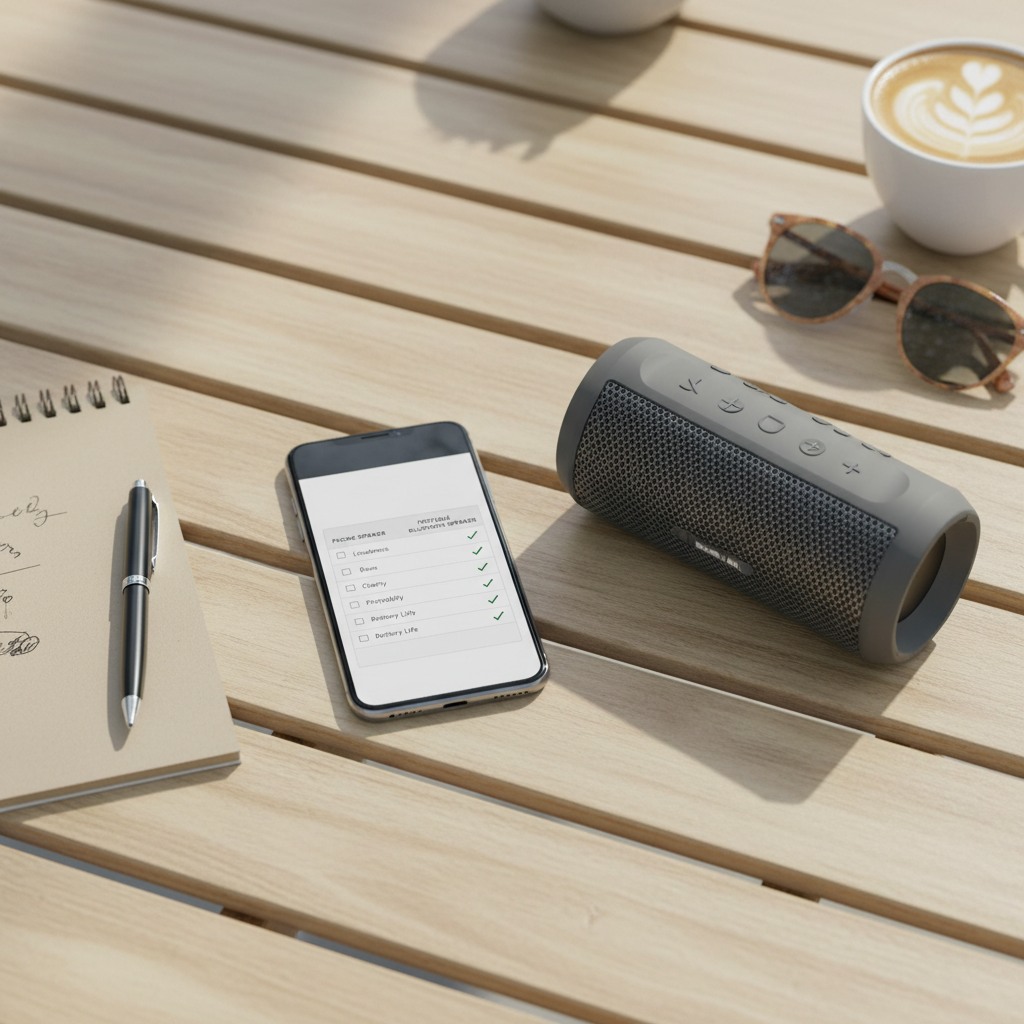
If you’re buying specifically for the outdoors, this table usually gets you 80% of the way there. The rest is picking the right protections and sound tuning.
Key specs that matter (and the ones you can ignore)
For best portable bluetooth speakers outdoor searches, spec sheets can be a trap. A few details genuinely predict outdoor satisfaction, others are mostly noise.
IP rating: what to look for
- IP67: Common sweet spot, strong dust protection plus water immersion rating. Good for beach and rain.
- IPX7: Water-focused, but dust is not rated, sand can still be a problem.
- IP55/IP56: Usually fine for light rain and splashes, less reassuring for sandy trips.
According to the International Electrotechnical Commission (IEC), IP codes describe levels of protection against solids and water, so “waterproof” claims without a clear IP rating deserve skepticism.
Battery: how to read it realistically
- Assume published hours are at moderate volume, not your loud outdoor setting.
- If you plan to run near max volume, favor models known for headroom rather than just big battery numbers.
- USB-C charging is not only convenience, it reduces the chance you forget a proprietary cable on a trip.
Drivers and tuning: why outdoor bass disappears
Outdoors, bass feels weaker because you lose room reinforcement. That’s why a speaker with slightly bigger drivers or a well-tuned EQ often feels “twice as good,” even if specs look similar.
What you can usually ignore
- Peak wattage marketing
- RGB lights, unless you truly want them
- “360 sound” labels without clarity on driver layout
A quick self-check: which speaker fits you in 2 minutes
Before you compare brands, answer these honestly. This is the part most buyers skip, then return the speaker.
- How far will your phone be? If it’s often 15–30 feet away with people in between, prioritize stability and antenna design, not just codec support.
- What’s the loudest environment? Calm campsite, breezy park, or surf and wind at the beach.
- What do you play most? Podcasts need vocal clarity, EDM needs bass control, mixed playlists need balance.
- Are you okay with weight? Under 2 lb feels “carry anywhere,” 4–8 lb becomes a planned item.
- Do you need speakerphone calls? If yes, look for decent mic noise handling, outdoors can be unforgiving.
- Will it touch sand or be near water? If yes, lean IP67 and fewer open ports.
If your answers point to “windy, loud, and far from the phone,” you’re not shopping for a tiny speaker anymore, and that’s fine. Buying too small is the most common misfire.
How to choose from the best portable Bluetooth speakers outdoor (by scenario)
Here are practical “if this, then that” paths. Use them as guardrails while you compare models and prices.
Scenario A: Hiking, minimal packing
- Pick a compact model with a strap or clip, IP67 if sand or river stops happen.
- Favor simple buttons you can press with cold fingers.
- Keep expectations realistic, you’re buying convenience over deep bass.
Scenario B: Campsite and backyard hangouts
- Mid-size speakers tend to be the best value, loud enough without feeling like luggage.
- Look for an EQ app or at least a “outdoor” tuning mode, it can help restore perceived bass.
- If you host often, consider models that support stereo pairing, two smaller speakers can beat one big box for coverage.
Scenario C: Beach days and windy parks
- Prioritize volume headroom and a rugged shell, sand plus sunscreen hands are a real stress test.
- Choose a speaker with a stable footprint, rolling in sand gets old fast.
- If you rely on it all day, consider power-bank functionality, but only if it doesn’t add too much bulk.
Scenario D: Poolside and boating
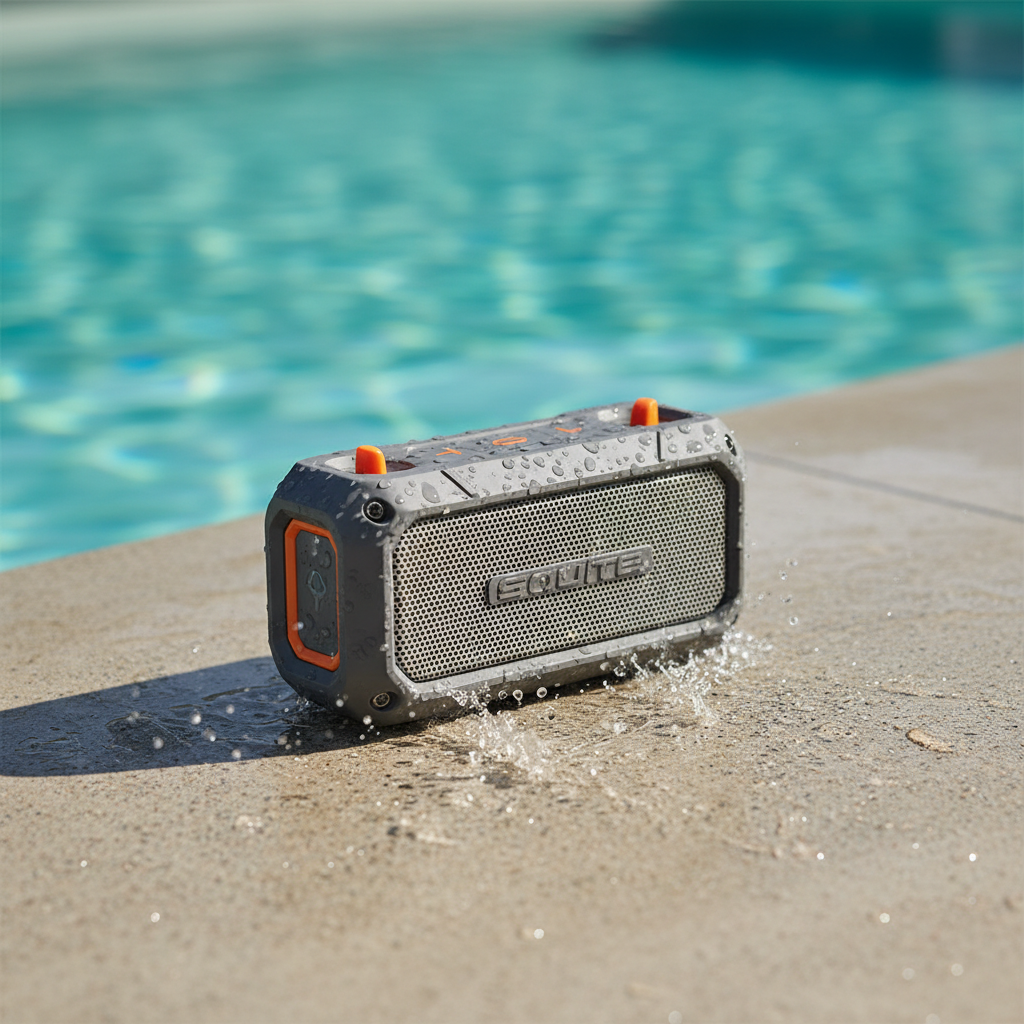
- Choose speakers with sealed builds and strong water ratings, and let them dry before charging.
- Avoid leaving the speaker in direct sun for long periods, heat can shorten battery life over time.
- If you’re on a boat, consider how you’ll secure it, a handle or lanyard point matters.
For any water-heavy setting, safety comes first. Keep volume at a level where you can still hear surroundings, and if you’re unsure about local rules or navigation safety, it’s worth checking with a professional or the relevant local authority.
Setup tips that make an outdoor speaker sound better
The same speaker can sound “fine” or “surprisingly good” depending on placement and settings. These tweaks are quick and usually free.
- Get it off the ground: A picnic table or cooler often improves clarity and perceived bass.
- Face it toward people: Sounds obvious, but many 360-style speakers still have sweet spots.
- Use EQ lightly: Add a small bass bump and reduce harsh treble, big boosts can cause distortion.
- Manage distance: If you walk around, keep your phone on the same side of your body as the speaker, bodies can block signal.
- Update firmware: Some brands quietly fix connection drops and pairing bugs.
Key takeaways you can screenshot:
- Outdoors, bigger drivers and clean volume matter more than fancy codecs.
- IP67 is a safe default for mixed outdoor use.
- Battery claims shrink at higher volume, plan for that.
- Placement is a “hidden feature” that changes sound a lot.
Common mistakes to avoid when buying
Most returns happen for predictable reasons, and they’re avoidable.
- Buying for “just in case” loudness and ending up with a speaker you never carry.
- Assuming “waterproof” means you can charge it wet, charging ports and water are a bad mix.
- Overvaluing multi-speaker party modes you won’t actually use.
- Ignoring controls, outdoor use punishes tiny buttons and confusing combos.
- Skipping a quick at-home test, play your usual playlist at your typical outdoor volume before your first trip.
Conclusion: a simple way to pick the right outdoor speaker
If you want best portable bluetooth speakers outdoor results without endless tabs, decide your size class first, then filter for IP rating, usable loudness, and charging convenience. After that, the “best” tends to be the one you’ll actually bring, not the one with the longest spec list.
Action step, write down your most common outdoor scenario and your must-have protection level, then shortlist 3 models in that category and compare weight, battery at realistic volume, and return policy before you buy.
FAQ
- What IP rating is best for a portable outdoor Bluetooth speaker?
For many people, IP67 is the most practical target because it covers dust and water exposure. If you rarely deal with sand, a lower rating might still work, but it gives you less margin for messy days. - How loud should an outdoor Bluetooth speaker be for a small group?
In calm settings, a mid-size speaker is typically enough. Wind and open spaces change the math, so if your hangouts are usually at the beach or busy parks, choosing a larger model with cleaner volume often feels easier than constantly maxing out a smaller one. - Do outdoor speakers sound worse outside than inside?
Often, yes, mainly because there are no walls to reinforce bass. A speaker with stronger low-end tuning or slightly larger drivers can compensate, and simple placement changes help more than people expect. - Is a “24-hour battery” claim realistic outdoors?
It can be, but usually at moderate volume. If you play louder outside, runtime often drops, so it’s smart to treat published numbers as a starting point and check independent reviews when possible. - Are two smaller speakers better than one big speaker outdoors?
Sometimes. Two speakers placed apart can cover a wider area and reduce the need to blast volume, but only if pairing is stable and you’re willing to manage charging for two devices. - What’s the difference between waterproof and water-resistant for speakers?
Brands use those words loosely, so the IP rating is the clearer signal. If the product page avoids IP details, assume protection is limited and treat it more carefully around water. - Can I use a portable speaker while charging outdoors?
You often can, but it’s not always ideal around water or dust. If conditions are wet or sandy, charging can be risky, so waiting until the speaker is dry and in a clean spot is the safer choice.
If you’re trying to narrow down the field and want a more “no fuss” plan, start by picking your size class and IP rating, then only compare models that meet those two requirements, it’s a faster path than reading fifty feature lists that won’t matter on your next trip.